Malaysian Food: Nasi Lemak, Laksa and Roti Canai
What to eat in Malaysia: nasi lemak, roti canai, char kway teow and regional laksa, with practical ways to choose dishes and ask about ingredients.
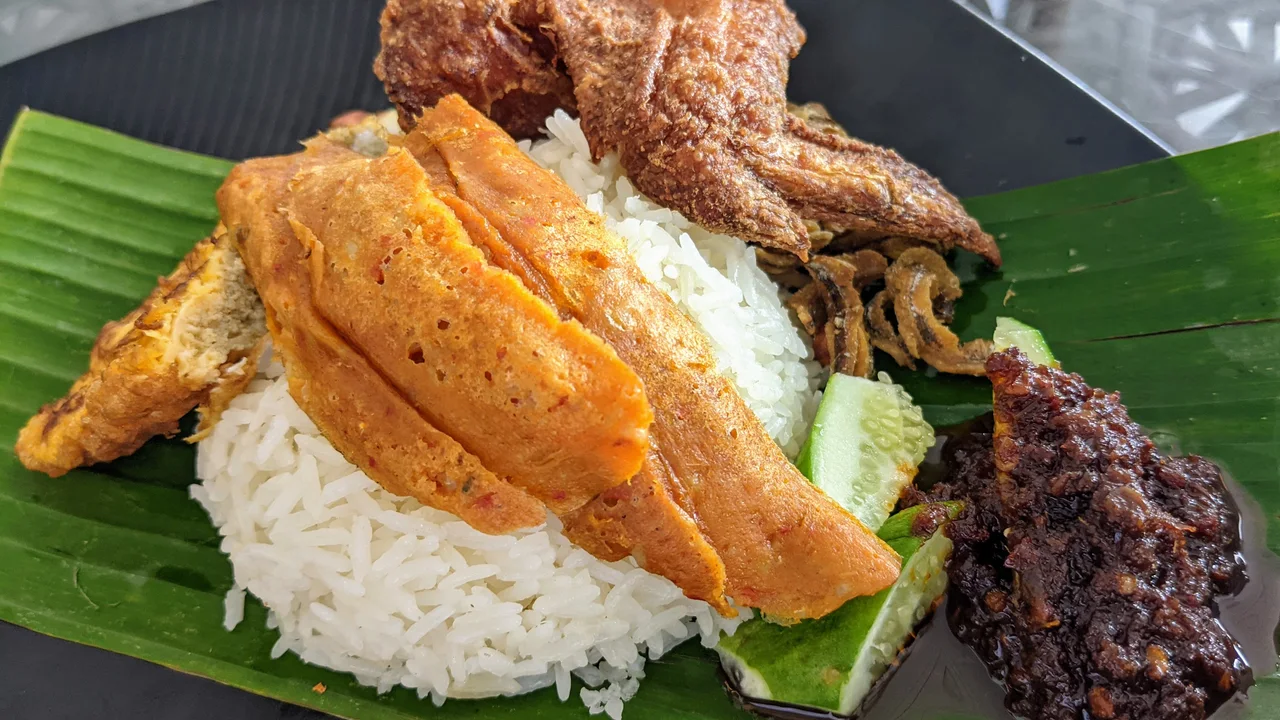
Start with nasi lemak for fragrant rice and sambal, roti canai for bread to pull through curry, and char koay teow when you want noodles from a hot wok. Then give laksa proper attention: the name covers several quite different soups, depending on where in Malaysia you order it.
The pleasure is in the contrast. Coconut rice beside a sharp chilli paste, soft noodles in a sour fish broth, flaky bread against dhal.
Nasi lemak starts with the rice
Tourism Malaysia describes the rice as cooked in coconut milk and pandan leaves, typically served with sambal, anchovies, peanuts, a hard-boiled egg and cucumber slices. Bigger plates add fried chicken, fried fish, fried squid or beef rendang. The rice is the fragrant centre; everything beside it supplies the salt, crunch, heat and cool.
The tourist board’s breakfast guide puts a plate at RM2 to RM20, depending mainly on where you buy it (page read on 17 November 2026). The same guide describes the sambal as a spicy shrimp paste, so it isn’t a vegetarian condiment just because the rice is.
Roti canai is pulled and folded
Roti canai is a flatbread made by folding and stretching the dough into layers, then cooking it on a griddle. It arrives with dhal or curry for dipping. Roti kosong, in Tourism Malaysia’s wording, “means no fillings”: the plain version, and the right first order for judging the bread itself. The breakfast guide lists fillings of egg, banana, chicken, lamb or tuna, served with chicken curry, fish curry, dhal or a mix of curries.
Roti canai is sold at the Indian tea stalls Malaysians call mamak stalls, which the same guide describes as a place to hang out as much as to eat. It also says roti canai is best eaten with bare hands, so don’t wait for cutlery.
It suits a slow first morning in Kuala Lumpur, before the larger sights. Tear a piece while it’s hot, before the edges lose their crunch; the softer layers in the middle carry the curry.
Char koay teow: the wok dish
Char koay teow is stir-fried flat rice noodles. Spelling varies on English menus: char kway teow, char kuey teow and the Penang bureau’s char koay teow all mean the same dish. Penang’s tourism bureau lists it among the state’s signature dishes, alongside assam laksa, and the Penang guide has the island’s districts for finding it.
Malaysia Airlines’ food guide describes a version with prawns, eggs, bean sprouts and Chinese sausage. The guide doesn’t say what the sausage is made of, so if you avoid pork, check before you order. Choose this when you want a concentrated, wok-fried plate; choose a soup when you want broth to be part of the meal.
Read the word after laksa
Laksa changes with the place name. Penang assam laksa has a strong fish and tamarind soup base and thick rice noodles: sour, savoury, no coconut. Curry mee, also called curry laksa, is a rich and fragrant coconut curry broth, so it sits at the opposite end. Sarawak laksa is a different bowl again: a prawn-based broth, often topped with shredded chicken and prawns, with sambal and lime on the side.
That’s the one decision worth making before you sit down. If you want sour, ask for the assam version; if you want rich, the curry bowl; in Sarawak, take the regional soup on its own terms instead of comparing it with Penang’s. Squeeze the lime and add sambal after a first taste, not before.
The rest of the table
A few more names you’ll meet, with Tourism Malaysia’s descriptions:
| Name | What it is | Good to know |
|---|---|---|
| Nasi kandar | Steamed white rice with an assortment of curries and side dishes, chicken, beef, fish or squid among them | Originates in Penang |
| Hokkien mee | Thick yellow noodles stir-fried in soy and oyster sauce, sometimes with fermented shrimp paste | That’s the Kuala Lumpur version; in Penang the same name can mean a different dish, so ask which you’re getting |
| Cendol | Shaved ice, coconut milk, palm sugar syrup and chewy green rice-flour jelly | A dessert, so the right order after a chilli-heavy meal |
| Satay | Grilled skewers of chicken, beef or lamb | Comes with a peanut sauce on the side |
| Mee goreng | Yellow egg noodles cooked with spices, vegetables, meat and sauces | Ever-present hawker food |
| Lontong | Compressed rice cubes in a coconut milk and turmeric broth with tempeh, tofu and boiled egg | A breakfast dish |
| Otak-otak | Ground fish meat, coconut milk and spices, wrapped in banana leaf and grilled or steamed | A street snack from bazaars |
| Karipap | Curry puff: pastry filled with potato, meat and curry, deep-fried | Handheld, so easy to eat while walking |
| Rojak | A mixed salad of fruit, vegetables and other ingredients in a thick, sweet and spicy dressing | Sweet, spicy and tangy at once |
| Nasi kerabu | A Malay rice dish with the rice coloured blue | Listed among the breakfast choices |
Teh tarik, a creamy, frothy tea named for the way it is poured from cup to cup, goes with any of them; Tourism Malaysia says it pairs well with any breakfast meal.
How the dishes fall across a day
Tourism Malaysia’s breakfast guide is wider than the hour suggests. Next to nasi lemak, roti canai, lontong and the blue nasi kerabu, with teh tarik alongside, it lists bak kut teh, Perlis laksa and fried noodles such as char koay teow and mee goreng, which it says can be enjoyed for breakfast, lunch or dinner. So there’s no wrong hour for noodles. If you only have a few days in a place, start with the rice and the bread and save the noodle and soup dishes for later meals, so you taste each family before you repeat one.
Pork on the menu
Malaysia’s menus are shared between Malay, Chinese and Indian cooking, and the dishes differ on pork. Tourism Malaysia describes bak kut teh, the “meat bone tea” soup, as built on pork ribs, and lor bak as marinated minced pork with shrimp and water chestnuts, wrapped in bean curd skin and deep-fried. Both belong to the Chinese side of the menu. Pork doesn’t appear in Tourism Malaysia’s descriptions of nasi lemak, roti canai or satay above, so a plate from one side of a food court can differ a lot from one on the other.
Where to order and how
Our Penang guide has the island’s hawker districts and its signature-dish list; in Kuala Lumpur, our city guide sends evenings to the Jalan Alor stalls, where most close on Mondays, and breakfasts to Kampung Baru. If you’re following our mainland route, leave one meal after arrival free of transfers and spend it on whichever of these dishes you haven’t tried.
A food walk helps if you’d like someone to explain the dishes as you go. Check the named stops, what the tastings include and whether the operator can meet your dietary needs before booking.
Ask about what’s in it
Rice, noodles and bread arrive with accompaniments that matter as much as the main ingredient: shrimp paste in the sambal, prawns and sausage in the noodles, peanut sauce with satay. If you avoid an ingredient, name it and ask about the whole order, sauces, broth and garnishes included. If halal certification matters to you, look for the JAKIM certificate displayed at the stall or ask before ordering, and use the Malaysian Halal Directory that JAKIM links to check a restaurant in advance; a cuisine’s name isn’t certification.
Photos
Read also

What to see · 7 min read
Batu Caves: 272 Steps, Free Temple Entry and the Train
Updated · 17 November 2026Batu Caves from Kuala Lumpur: free entry to the temple cave, 6am-9pm hours, 272 steps, the KTM Komuter train (about 30 minutes) and Thaipusam 2027.

Car hire · 7 min read
Car Hire in Malaysia: Licence, Tolls and Driving on the Left
Updated · 17 November 2026Car hire in Malaysia: home licence plus an IDP for UK, US and Australian drivers, Hertz deposit and excess, cashless tolls and driving on the left.

Things to do · 9 min read
Diving and Snorkelling in Malaysia: Reefs, Seasons, Sipadan
Updated · 17 November 2026Redang and Tioman run roughly March to October, Perhentian resort by resort; Sipadan needs a permit and an FCDO warning read first. Fees in RM.

Towns · 8 min read
Kuala Lumpur: Airport Train, Where to Stay and 3 Days
Updated · 17 November 2026Kuala Lumpur for a first trip: KLIA Ekspres fares and times, KLCC, Bukit Bintang or Chinatown as a base, getting around, Batu Caves and how many days.