Give Penang three nights if you want George Town properly, four if you also want a half-day on the hill and a beach afternoon. Sleep in or beside the old town, treat the beaches as an add-on rather than the point, and don’t drive: the sights worth your time sit within a short bus or ride-hailing hop of each other.
Penang is a state with two halves. The island holds George Town, the hill and the beach strip; the mainland side, across the water, holds Butterworth, where long-distance trains and the ferry meet. Most first trips stay on the island, which is fine, but the mainland is where you arrive if you come by train from Kuala Lumpur.
George Town: what the heritage label means on the ground
UNESCO inscribed “Melaka and George Town, Historic Cities of the Straits of Malacca” on the World Heritage List in 2008, and describes George Town as the place that represents the British era from the end of the 18th century. What you get is a grid of shophouses, clan houses, temples and mosques within walking distance of each other, rather than one headline monument.
Penang Global Tourism, the state tourism bureau, names the stops to build a walk around. Along its Street of Harmony stand Kapitan Keling Mosque, Sri Maha Mariamman Temple, Goddess of Mercy Temple and St George’s Church, four faiths on one street. The Cheong Fatt Tze Mansion is the one with the indigo facade, the Pinang Peranakan Mansion shows how the wealthy Peranakans lived, Leong San Tong Khoo Kongsi is a clan house, and Fort Cornwallis and the Queen Victoria Memorial Clock Tower cover the colonial layer. The Clan Jetties are wooden houses built on stilts over the sea, and they’re a settlement you walk through rather than look at.
The mistake first-timers make is trying to “do” it in a morning. Walk it in two slices: the Street of Harmony and one clan house or mansion on one day, early before the heat, and the street-food hours in the evening on another. Between those, the afternoon is for a cold drink, a shower and a nap. The humidity does more to shape a day here than any list of sights. Each house and museum sets its own entry price and hours, so check its own page on the day.
Penang’s food: where to go and what to order
The bureau calls Penang Malaysia’s food capital, and its street-food page names the districts: around Gurney Drive, New Lane, Chulia Street, Air Itam and Pulau Tikus. Chulia Street is in George Town itself, which makes it the easy evening for an old-town base; Gurney Drive lies beyond the heritage zone, so it needs a short ride. Air Itam is the one to pair with Kek Lok Si below, because lunch there won’t cost you an extra trip.
For what to order, the bureau’s list of signature dishes is char koay teow (stir-fried flat rice noodles), assam laksa (a sour, fish-based noodle soup), nasi kandar (rice served with a choice of curries), pasembor and cendol (a sweet iced dessert), and its street-food list adds Hokkien mee and curry mee. Many hawkers specialise in a single dish, so queue for the one a stall is known for and don’t order across the menu. Hours differ from stall to stall, from early-morning coffee shops to hawker centres busy well into the night, so read the stall’s own sign or ask at your hotel on the day. Our guide to Malaysian dishes and regional laksa explains how Penang’s assam laksa differs from the curry and Sarawak bowls.
Penang Hill: the funicular, with real prices
The hill is the easiest half-day out of town, and it’s the funicular that gets you up there. Penang Hill Corporation lists daily operation from 6.30am to 11.00pm, with a departure every half hour and extra trips when needed. The last trip up leaves the lower station at 10.00pm and the last trip down leaves the top at 11.00pm; ticket counters at the lower station run from 6.15am to 9.45pm. The track is 1,996 metres and the ride takes about five minutes, longer when the train stops at the substation.
Prices on the operator’s ticket page, read on 16 November 2026, depend on who you are. The cheaper tier is for holders of Malaysian ID and some resident documents, so as a visitor you pay the standard tier. For a two-way ticket, a standard adult (13 to 59) pays RM40 in the normal lane and RM80 in the express lane; a child aged 4 to 12 pays RM20 and RM40; a senior aged 60 and over pays RM30 and RM60. One-way standard adult tickets are RM25 and RM50. The operator reserves the right to change hours and prices without notice, so confirm on penanghill.gov.my before you go.
Is the express lane worth double? Only on a weekend or holiday, when the normal-lane queue can eat into a short day. On a weekday morning, take the normal lane and save the RM40.
The hill is also a protected area: Penang Hill was designated a UNESCO Biosphere Reserve on 15 September 2021, covering 12,481 hectares. If you’d rather walk than ride, and it hasn’t just rained, the hiking trails page on the operator’s site shows which paths are open. From the town, Rapid Bus route 204 runs from the Jetty or KOMTAR to Bukit Bendera, the lower station.
Kek Lok Si: pair it with the hill
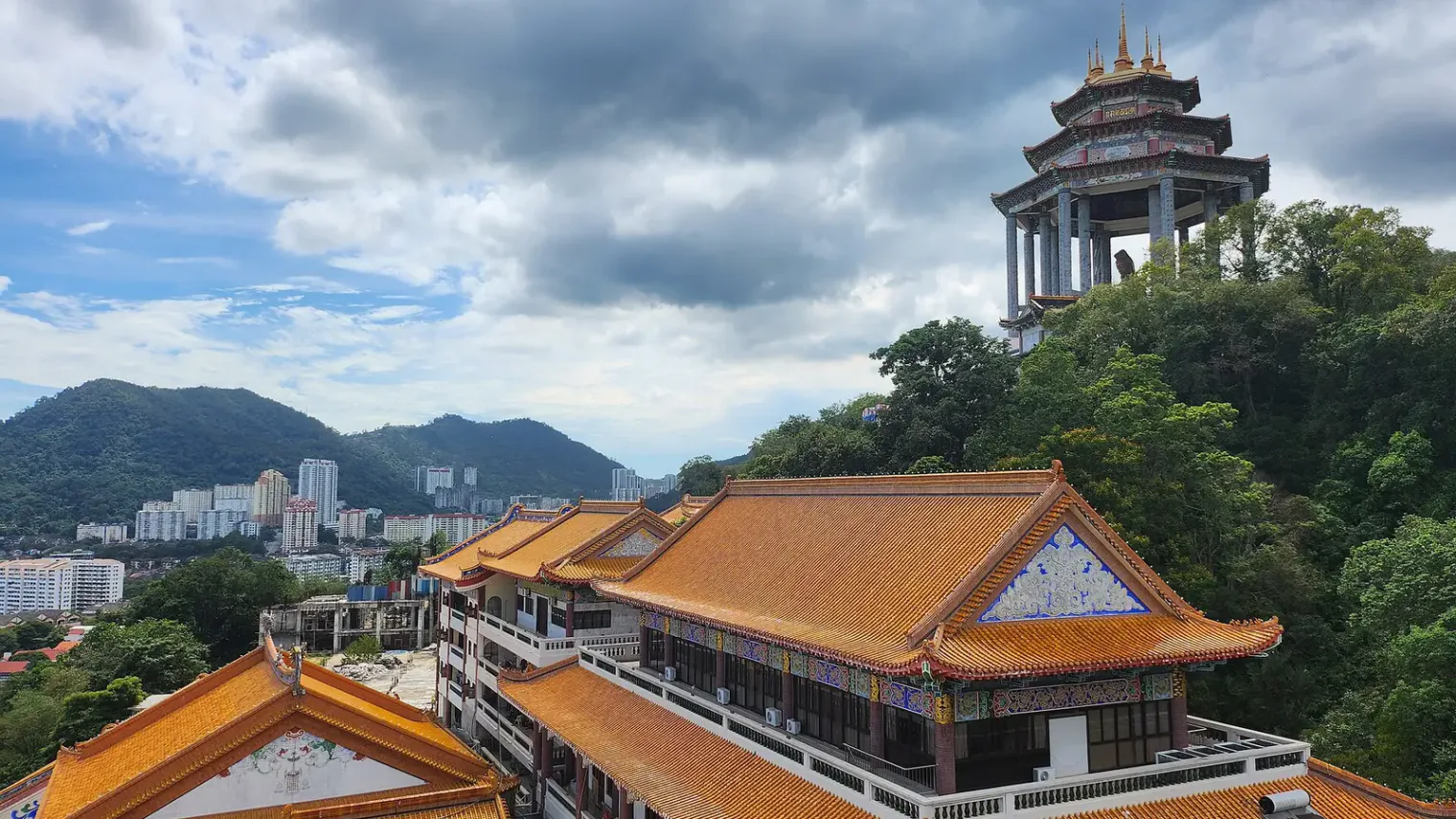
Penang Global Tourism lists Kek Lok Si among the state’s places of worship and calls it one of Southeast Asia’s largest Buddhist temple complexes. It sits on the hillside at Air Itam, a short ride out of George Town and close to the funicular’s lower station, so you’ll want to pair the two in one outing: temple first, while the light is soft, then the hill. Splitting them costs you a second round trip out of town, and on a wet day there’s a fair chance one gets skipped. Opening hours and any charge for the pavilions or the lift are not something we’ve confirmed with the temple, and published figures disagree, so ask at the gate. Dress modestly, as the bureau advises for any place of worship, and expect to take your shoes off at some entrances.
Beaches: what Batu Ferringhi is good for
Batu Ferringhi, on the island’s north coast, is the resort strip: hotels, a night market, water sports. It’s convenient and it’s busy, but a beach on a shipping strait isn’t where you’ll want to go for clear-water snorkelling. If swimming and snorkelling are the reason for your trip, head for the islands; the diving and snorkelling guide covers where and when. Use Penang’s beaches for a pool-and-sunset afternoon, not as the headline.
Old town, waterfront or beach: where to sleep
| Area | Good for | Watch out for |
|---|---|---|
| George Town old town | First visit, food, walking, no car | Noisy lanes at night; older rooms, so look at recent photos |
| Gurney Drive | Seafront eating and shopping areas | Outside the heritage zone, so a short ride to the old town |
| Batu Ferringhi | Beach, pool, families | Bus or car into George Town for the sights |
For three to four days, the old town wins for anyone without a car. You can walk to dinner, ride to the hill and leave parking to someone else.
Getting to Penang and around
The island has its own airport, Penang International (PEN). From there, a taxi or a ride-hailing car into George Town is the simplest first move; Rapid Penang runs the island’s buses, and its route list on myrapid.com.my shows which line reaches your hotel.
By train, KTMB’s ETS service from KL Sentral stops at Butterworth on the mainland, and Tourism Malaysia puts the ride at approximately 4 hours. ETS fares change with the travel date and the departure time, so read yours at booking on the KTMB site. From Butterworth you cross to the island by ferry between Pangkalan Sultan Abdul Halim on the mainland and Pangkalan Raja Tun Uda in George Town. Penang Port’s notice of 6 September 2023 sets the fare at RM2.00 for an adult (12 and over) “at each terminal”, so read that as a charge on each leg. For children, the Penang Port Commission’s ferry page (read 17 November 2026) lists RM1.00 for ages 5 to 11 and free travel at 4 and under; check the current figure at the barrier. Since 1 May 2025 you can pay there with a credit card, debit card or e-wallet, so you don’t need coins. Our transport guide sets this train and ferry journey beside the coach via the Cameron Highlands and the flights to Borneo.
The ferry is the slow, pleasant way across and the better arrival if you came by train. The bridges are for cars and buses; a hire car on this island is more trouble than help for a short stay, as parking in the old town is tight.
How it fits a wider trip
Penang slots between Kuala Lumpur and Langkawi on most peninsular routes. The 10-day Peninsular Malaysia route puts Penang between the Cameron Highlands and Langkawi; if you continue to Langkawi, give a day to Langkawi’s cable car and bridge. If you’re doing only Kuala Lumpur and one more place, Penang is a safe second stop, because George Town has plenty to do indoors when it rains. If Borneo follows Penang, the peninsula and Sabah route flies from Penang straight to Kota Kinabalu.
Photos
Read also

What to see · 7 min read
Batu Caves: 272 Steps, Free Temple Entry and the Train
Updated · 17 November 2026Batu Caves from Kuala Lumpur: free entry to the temple cave, 6am-9pm hours, 272 steps, the KTM Komuter train (about 30 minutes) and Thaipusam 2027.

Car hire · 7 min read
Car Hire in Malaysia: Licence, Tolls and Driving on the Left
Updated · 17 November 2026Car hire in Malaysia: home licence plus an IDP for UK, US and Australian drivers, Hertz deposit and excess, cashless tolls and driving on the left.

Things to do · 9 min read
Diving and Snorkelling in Malaysia: Reefs, Seasons, Sipadan
Updated · 17 November 2026Redang and Tioman run roughly March to October, Perhentian resort by resort; Sipadan needs a permit and an FCDO warning read first. Fees in RM.

Towns · 8 min read
Kuala Lumpur: Airport Train, Where to Stay and 3 Days
Updated · 17 November 2026Kuala Lumpur for a first trip: KLIA Ekspres fares and times, KLCC, Bukit Bintang or Chinatown as a base, getting around, Batu Caves and how many days.